Projects / Sewage Collection, Transmission, Treatment, Disposal and Reuse
Detailed Needs Assessment for Recommissioning AL Sheikh Ejleen WWTP in Gaza City
- Client / financing
- Coastal Municipalities Water Utility / International Committee of the Red Cross
- Location
- Palestine
- Dates
- 2026
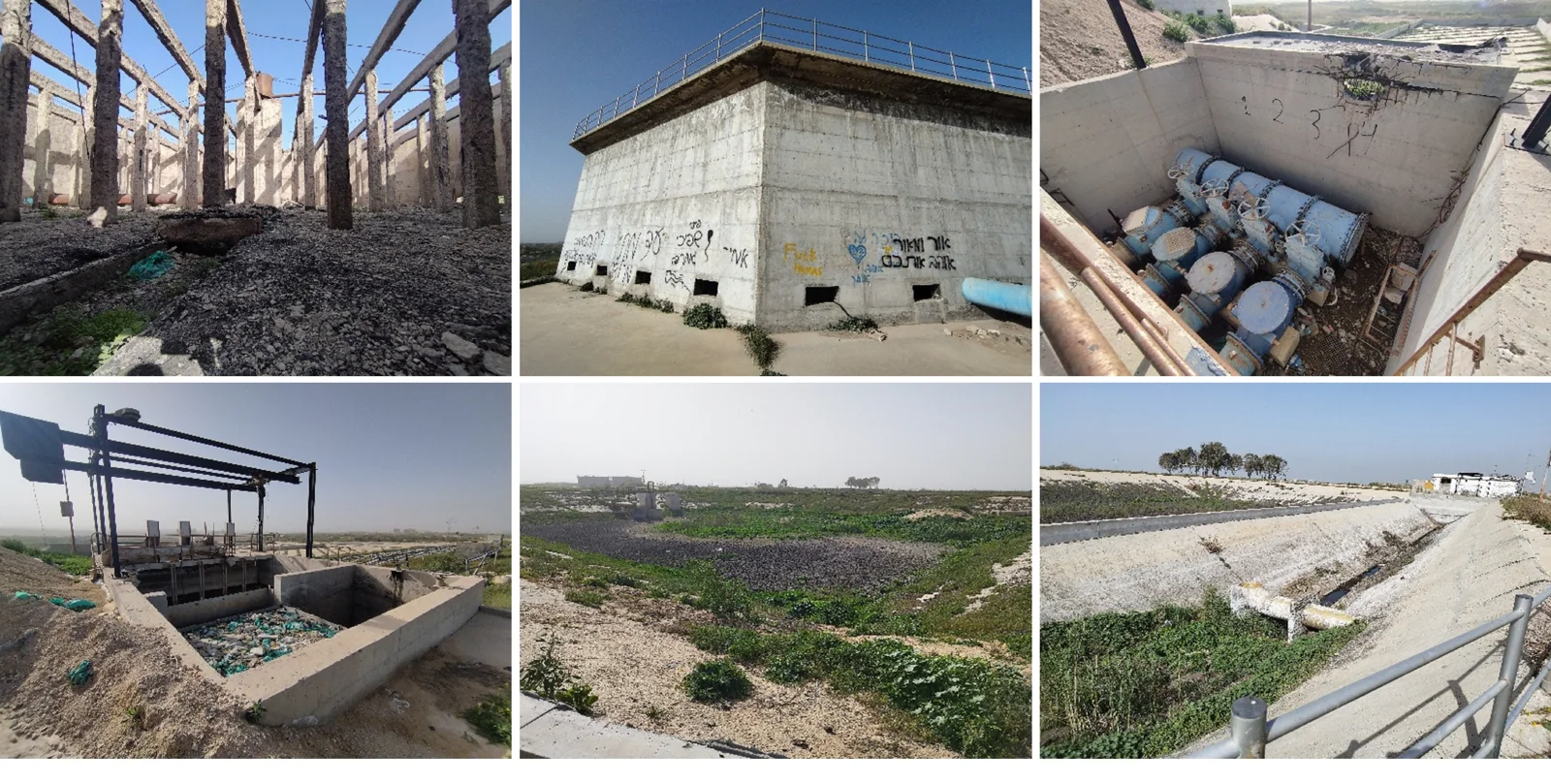
CEP was commissioned by CMWU, with support from ICRC, to undertake a comprehensive technical assessment and develop a preliminary design for the rehabilitation and recommissioning of the AL Sheikh Ejleen Wastewater Treatment Plant (SE-WWTP) in Gaza. The facility, which represented a critical component of Gaza City’s wastewater management system, had experienced significant operational disruption and infrastructure deterioration due to prolonged conflict, lack of maintenance, and energy constraints.
The assignment commenced with an extensive field-based condition assessment covering all treatment units, electromechanical systems, hydraulic structures, and auxiliary facilities. CEP’s multidisciplinary team conducted detailed inspections of inlet works, screening systems, pumping stations, biological treatment units (including trickling filters and bio-towers), secondary clarifiers, sludge handling facilities, and effluent discharge systems. The assessment documented structural damage, mechanical failures, corrosion, clogging, and process inefficiencies, alongside evaluation of residual capacity and operability.
A comprehensive analysis of plant performance and constraints was carried out, supported by process modeling using BioWin. The modeling enabled evaluation of current treatment efficiency, identification of process bottlenecks, and simulation of alternative rehabilitation and operational scenarios. Special attention was given to influent characteristics, organic loading, hydraulic capacity, and the impact of temperature and partial system functionality on biological treatment performance.
Based on the findings, CEP developed a phased rehabilitation and recommissioning strategy aligned with realistic operational scenarios. Phase I focused on short-term interventions to restore partial functionality within a six-month horizon, while Phase II addressed medium-term rehabilitation requirements for sustained operation over a two-year period. The proposed solutions included repair and replacement of critical components, process optimization measures, and targeted upgrades to improve reliability and treatment efficiency.
The consultancy further delivered a preliminary design package and basis for tender documentation, including process design criteria, hydraulic profiles, layout optimization, and identification of priority investment packages. The proposed rehabilitation approach prioritized rapid service restoration, operational resilience, and adaptability to Gaza’s constrained energy and resource context, while aligning with international wastewater treatment standards and best practices.